
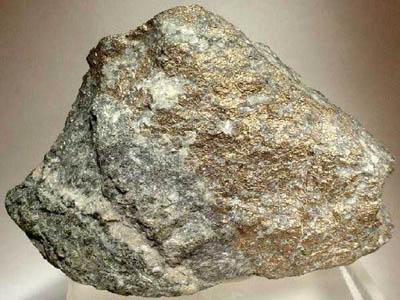
1. The origin, composition and consumer market of ferronickel
With the rapid development of our country's stainless steel and battery industry, the domestic supply of nickel products will face a long-term shortage. Since 2005, the irrational rise in nickel prices in the international market has posed a new challenge to the development of the domestic steel industry. Private enterprises in our country use pyrotechnic smelting laterite nickel ore imported from the Philippines and Indonesia, and mass-produce ferronickel alloys as ingredients for smelting stainless steel, successfully sniping the crazy hype in the international market.
our country has made a major breakthrough in nickel metal production technology, with independent intellectual property rights, laterite nickel ore smelts nickel chromium pig iron through blast furnace, producing a large number of nickel pig iron actual results. Technological changes and their rapid entry into the field of production and application have successfully sniped the crazy speculation in the international market, and the nickel price in the international market fell sharply in June 2007. In the case of high nickel prices in the market, since 2005, domestic private enterprises have begun to use steelmaking blast furnaces to convert to smelting laterite nickel ore to produce nickel pig iron.
Private enterprises in our country began to use laterite nickel ore imported from the Philippines and Indonesia on a large scale to smelt nickel pig iron, and since then the amount of imported ore has increased month by month, and by the end of 2007, more than 3 million tons of imported ore were used, and the nickel content of nickel pig iron was about 30,000 tons. In 2007, there were more than 100 small and medium-sized enterprises producing nickel pig iron in China, and about 12 million tons of ore were imported in l~September.
At present, the nickel content of nickel pig iron produced by small and medium-sized enterprises in our country is mostly 4%~8%, which can only be used as an ingredient for smelting stainless steel. Only by improving the technology to make the nickel content in nickel pig iron reach l2%~15% can pure nickel be completely replaced when smelting stainless steel. This is the reason for the backlog of ore in the port, and it is also the technical difficulty that private enterprises need to overcome in the future. According to the latest information, some technologically advanced enterprises can already produce nickel pig iron with a nickel content of more than 10%.
Successful cases: Fujian Dingxin, Zhejiang Qingshan, Shandong Linyi. The production process used in the nickel pig iron project is: ore → ore + quicklime→ dehydration→ sintering→ sintering sintering ore cooling and crushing→ sintering crushing ore + limestone + coke→ blast furnace smelting→ ingots→ ingots finishing and packaging. The product is ferronickel (nickel content 4%~7%), with an output of 80,000 tons/year. In addition, the group is preparing to build a new nickel pig iron project on OBI Island in Indonesia, seeking to start a business and develop overseas.
our country uses fire method to use laterite nickel ore to smelt nickel pig iron, which has undergone major changes in the composition of stainless steel production raw materials, changed the supply and demand pattern of nickel raw materials for global stainless steel production, and also changed the development pattern of the world stainless steel industry. The low-cost utilization of laterite nickel ore resources with poor ore quality is in line with the historical development trend of resource conservation and opens a new chapter in the history of stainless steel production in our country. At present, the market capacity of low-grade products of blast furnace method has been saturated, and accelerating the development of rotary kiln technology with a grade of more than 10% can further expand the market capacity of laterite mine pyrotechnic nickel.
2. The process and technology of rotary kiln production of ferronickel in laterite nickel ore
The ore is dried and enters the rotary kiln, heated to 800 °C in the rotary kiln to remove the surface moisture and crystalline water of the ore, and partially reduces the iron, nickel and cobalt oxides in the ore, and enters the electric furnace for melting. The rotary kiln process has the following advantages compared with the blast furnace method or electric furnace method:
(1) The main energy source for smelting is coal, not expensive coke or electricity.
(2) Free choice of raw materials, various laterite nickel ores in Southeast Asia can be used.
(3) The high nickel ferro-nickel produced is of high quality (including about 20% Ni), which can be directly used as raw materials for the production of stainless steel.
(4) It can also be used as a coolant when molten steel is melted.
The smelting method and process are as follows:
The pretreatment step is to grind the raw laterite nickel ore finely, mix it with carbon-containing materials and flux limestone, and then feed it continuously into the rotary kiln. In a rotary kiln, the hot air flow generated by the combustion of material and coal moves against the flow and undergoes all the melting steps - drying, dehydration, reduction and metal growth. The metal is generated in semi-molten conditions in a kiln. The frit of the fired material is crushed from the rotary kiln, and after grinding, the reduced nickel-iron alloy is separated from the discharged frit by re-separation and magnetic separator. The separated ferronickel particles are sandy particles with a diameter of 2~3 mm, and are entrained with 1~2% slag, and their chemical composition is C0.1%, Ni18~22%, S0.45%, P0.015%. This product is suitable for the steelmaking process regardless of the sulfur content, because it has a good desulfurization ability during steelmaking. Sand particles are quite conducive to continuous feeding and rapid dissolution of coolant materials in the steelmaking process.
The recovery rate of nickel and iron in the production process of rotary kiln is very high, both above 90%.
3. Financial analysis
At present, the nickel market is at a low point, electrolytic nickel is about 100,000 yuan/ton, which is equivalent to 1,000 yuan/ton of ferronickel (1% Ni or one Ni, equivalent to 10Kg nickel).
At present, the domestic port price of imported laterite nickel ore is about 400 yuan/wet ton (low iron and high nickel ore, about 2% Ni, about 10% Fe), which is equivalent to 200 yuan/ton Ni.
Taking the above-mentioned laterite nickel ore as an example, processing one ton of laterite nickel ore can obtain about 20% high nickel ferronickel about 100Kg, the total production cost is about 250 yuan/ton of ore, the ore cost is 500 yuan (plus freight), and the ton of finished products requires about 10 tons of raw ore, the total cost is about 7,500 yuan, the price is about 20,000 yuan (20% Ni), the profit is more than 10,000 yuan, and the profit margin is 100%. There is a rotary kiln production line suitable for ferronickel production, which does not require fixed asset investment, and the production line can be leased for production by investing 10 million yuan of working capital (the rent is extremely low). The annual processing capacity of the production line is 100,000 tons of raw ore, which can produce 10,000 tons of high nickel ferronickel, with an output value of 200 million yuan and a profit of 100 million yuan.
Ferronickel production process
1. Nickel, ferronickel and nickel ore
Nickel is a silvery-white metal with a slight yellow tinge, and is a magnetic transition metal. The application of nickel lies in the corrosion resistance of nickel, and the addition of nickel to the alloy can enhance the corrosion resistance of the alloy. The field of stainless steel and alloy production is the most widely used area of nickel. About two-thirds of the world's nickel is used in stainless steel production, so the stainless steel industry's impact on nickel consumption ranks first. The main role of nickel in stainless steel is that it changes the crystal structure of steel. One of the main reasons for adding nickel to stainless steel is the formation of austenitic crystal structures, which improve the properties of stainless steel such as plasticity, weldability, and toughness, so nickel is called an austenitic forming element. At present, among the world's non-ferrous metals, nickel consumption is second only to copper, aluminum, lead and zinc, ranking fifth among non-ferrous metals. Therefore, nickel is regarded as an important strategic material and has always been valued by all countries.
The main components of ferronickel are nickel and iron, and also contain impurities such as Cr, Si, S, P, and C. According to the international standard (ISO), ferronickel is divided into FeNi20 (Ni 15%~25%), FeNi30 (Ni 25%~35%), FeNi40 (Ni 35%~45%) and FeNi50 (Ni 45%~60%) according to nickel content. It is further divided into high carbon (C 1.0%~2.5%), medium carbon (C 0.030%~1.0%) and low carbon (C <0.03%). Low phosphorus (P <0.02%) and high phosphorus (P <0.030%) nickel ferro. At present, the ferronickel grades produced by domestic manufacturers are mainly concentrated in 1.6~2.0%, 4~8% and 10~15%, and there are also a small number of manufacturers that can produce ferronickel with nickel content of more than 20%.
There are two types of mineable nickel resources in the world, one is sulfide deposits and the other is oxidation deposits. Due to the good quality of nickel sulfide ore resources and mature process technology, about 60%~70% of nickel production comes from nickel sulfide ore. About 65% of the world's nickel reserves are stored in nickel oxide deposits, which are also commonly known as laterite nickel ores because they are red because of their iron oxide content. At present, most of the laterite nickel ores found are distributed along the Tropic of Cancer area, such as Australia, Papua New Guinea, New Caledonia, Indonesia, the Philippines and Cuba.
2. Process principle
Although the processing process of laterite nickel ore is mainly divided into wet smelting process and pyrosmelting process, the most mature process method of using laterite nickel ore to smelt nickel-ferroalloy in the world is still mainly pyrometurgy.
Pyro-smelting ferronickel is obtained by reducing NiO and other oxides (such as FeO) in nickel oxide ore with C (or Si) as a reducing agent under high temperature conditions. At the same time, the selective reduction process was adopted, the reducing agent was used rationally, and the reduction reaction was carried out according to the reduction order of NiO, FeO, Cr2o3 and SiO2.
Due to the different compositions of nickel ore in different origins, the compounds composed between NiO and various oxides are also different, so the actual reaction in the ferronickel smelting process is more complex. The Ni and Fe produced by the reaction can be miscible in different proportions to form ferronickel.
From the above reaction formulas (1) and (2), it can be seen that the starting temperature of NiO and FeO reduction reactions is low, and the starting temperature of NiO is about 200°C lower than that of FeO. Therefore, in the process of pyro-smelting of ferronickel, although the NiO content of the nickel ore used is low, more than 90% of the NiO is reduced, and in the case of very low Ni/Fe, the Ni content of the product can be increased to a higher level through different process operations.
3. Pretreatment of laterite nickel ore
laterite nickel ore is an amorphous type of mineral. The composition fluctuations range of different nickel ore types are: Ni 0.87%~3.8 5%, Fe 6%~50%, MgO 1.5%~32%, Si02 5%~58%, Al2O3 1%~15%, P 0.000 4%~0.000 2%, S 0.00l%~0.08%.
Another feature of laterite nickel ore is high moisture, especially at present, the climate of the Philippines and Indonesia, the main importers of laterite nickel ore in our country, is rainy and humid, and the moisture in nickel ore basically fluctuates in the range of 30~35%. In order to ensure the stability of the ferronickel smelting furnace, the nickel ore must be dehydrated and lumped before entering the furnace. Different ferronickel manufacturers generally use the following pretreatment methods for the dehydration and sintering treatment of nickel ore before entering the furnace:
(1) Rotary kiln drying→ block forming→ rotary kiln high temperature dehydration and preheating.
(2) Rotary kiln drying→ block formation→ shaft furnace sintering and pre-reduction.
(3) Rotary kiln drying→ dehydration and sintering (including pre-reduction).
The investment cost and process operation difficulty of different nickel ore treatment processes are different, and the impact on the comprehensive energy consumption and product quality of the entire ferronickel smelting process is also different, so with the scale of ferronickel production in our country, it is worth analyzing which nickel ore pretreatment method to choose.
4. Several processes
1. Rotary kiln direct reduction method
Nickel ore → drying→ crushing→ mixing coke and flux mixture→ preheating→ rotary kiln dehydration, reduction→ solid-melt slag-iron mixture→ water quenching→ grinding→ jigging, strong magnetic separation and other multi-stage slag-iron separation→ fine-grained ferronickel→ electric furnace remelting→ refining desulfurization→ ferronickel.
The process uses a rotary cellar to dehydrate and roast the nickel mass ore, reduce NiO, FeO and other oxides, accumulate metals, and finally generate molten spongy slag-filled ferronickel. The heat energy of the melting process comes from the heat released by the combustion of pulverized coal (or heavy oil), which is the production process with the simplest equipment, the shortest metal generation process and the lowest comprehensive energy consumption in the production of ferronickel smelting by pyrotechnic.
2. Blower furnace method
Nickel ore → rotary kiln drying→ block → mixed with coke → blast furnace smelting→ crude ferronickel → refining to reduce Si, C, P, S → ferronickel.
This process has similarities with blast furnace smelting ferronickel in terms of smelting equipment structure. Coke combustion and exothermic heat are used as the heat source during the smelting process, but the reaction mechanism is different. The Ni content of ferronickel smelted directly from the blast furnace basically depends on the Ni/Fe ratio in the furnace nickel ore, while the Ni content of crude nickel produced by the blast furnace method is not limited by the size of the ratio.
The blast furnace process is the earliest technology to appear in laterite nickel ore smelting ferronickel, which was applied in 1875 in a small blast furnace in New Caledonia, and later also used in France, but this method was criticized for consuming a large amount of high-quality coke and serious pollution. In 1985, the last ferronickel blast furnace of the Sagaseki smelter of the Japanese mining company Sagaseki smelter was shut down, marking the end of the life of ferronickel smelting technology in developed countries such as Europe, America and Japan.
3. Blast furnace method
Nickel ore → dehydration, sintering, lumping→ blending coke, flux→ blast furnace smelting→ crude ferronickel → refining to reduce Si, C, P, S→ ferronickel.
In China, the fire method used in recent years to smelt ferronickel is more common, mainly borrowed for the direct conversion of existing small ironmaking small blast furnaces, and the specific operation is similar to that of small blast furnaces for the production of pig iron, especially suitable for the use of low-Ni and high-Fe nickel ore to produce low-Ni ferronickel (nickel pig iron).
The FeO in the furnace nickel ore can be fully reduced by the C in the coke, so the Ni content in crude ferronickel is basically limited by the ratio of Ni/Fe in the furnace nickel ore.
Since the state restricts the use of small blast furnaces below 400 m3, and the use of mineral thermal electric furnaces and the use of low-nickel and high-iron nickel ore to directly produce low-Ni ferronickel seems to be less rational and easy to operate, the rationality and operability of the process seem to be inferior to the blast furnace method, so the use of large-capacity blast furnaces to smelt low-Ni ferronickel is worthy of attention and research.
4. Electro-carbon thermal method
Nickel ore → dehydration, lumping→ mixing coke and flux → electric furnace smelting→ crude ferronickel → refining C, Si, P, S refining→ ferronickel.
The electro-carbon thermal method uses C as the reducing agent, under the condition of high temperature of electric energy, the reduction of NiO, FeO and other oxides in the nickel ore to smelt ferronickel, therefore, in the process of electric furnace smelting, adjust the appropriate amount of carbon to limit the reduction of FeO, and can produce ferronickel in the electric furnace with high Ni content.
This process is mainly used in foreign pyrotechnic smelting, and domestic manufacturers are also commonly used when producing products containing more than 10% Ni. The main smelting equipment is mineral thermal electric furnace, and some domestic manufacturers also use electric furnaces with similar structure to electric arc furnaces (the maximum capacity of their equipment is 9 MVA), and their nickel ore pretreatment methods, specific operations of smelting processes, refining process equipment and refining effects are different, and there are certain differences in the comparison of various indicators.
5. Electrosilicon thermal method
Nickel ore → drying→ crushing→ high-temperature dehydration and calcination into pieces→ adding flux → ore thermoelectric furnace melting→ NiO melt → pouring human reaction package→ adding 45% ferrosilicon → inverting reaction → crude nickel ferro→ refining → ferronickel.
The electro-silicon thermal process uses Si as a reducing agent to reduce NiO, FeO and other oxides under high temperature conditions to produce nickel ferro.
According to the data, the foreign electrosilicon thermal process is outside the furnace, through the back-packing operation, so that the added Si reduces the NiO in the melt to form ferronickel, which is basically the same as the reaction mechanism and process operation of the hot mixing method to produce microcarbon ferrochrome, so it can be called ...
5. Electrosilicon thermal method
Nickel ore → drying→ crushing→ high-temperature dehydration and calcination into pieces→ adding flux → ore thermoelectric furnace melting→ NiO melt → pouring human reaction package→ adding 45% ferrosilicon → inverting reaction → crude nickel ferro→ refining → ferronickel.
The electro-silicon thermal process uses Si as a reducing agent to reduce NiO, FeO and other oxides under high temperature conditions to produce nickel ferro.
According to the data, the foreign electrosilicon thermal process is outside the furnace, through the inverted wrapping operation, so that the added Si reduces NiO in the melt to form ferronickel, which is basically the same as the reaction mechanism and process operation of the hot mixing method to produce microcarbon ferrochrome, so it can be called the hot fusion process.
5. The significance of the ferronickel industry
With the development of our country's economy and the improvement of people's living standards, stainless steel production and consumption have grown rapidly. Chromium-nickel stainless steel is the main stainless steel variety for consumer nickel, which is widely used due to its excellent comprehensive properties, accounting for 60%~75% of the total stainless steel output. The growth of stainless steel production will drive the growth of nickel metal consumption. With the gradual subsidence of the impact of the financial crisis, nickel prices have returned to more than 20,000 US dollars, the advantages of ferronickel alloys in reducing the cost of stainless steel smelting have gradually been reflected, ferronickel occupies an important position in stainless steel raw materials, and the domestic ferronickel smelting industry has ushered in another good opportunity for development after experiencing 08 years of depression and decline.
In addition, because electrolytic nickel is mainly obtained from nickel sulfide smelting, and the sulfide ore extraction process is mature, long-term large-scale mining makes the world have not many sulfide ore resources available for development in the near future, coupled with the exploration cycle and construction period of sulfide ore resources are long, development and utilization are relatively difficult, contrary to the situation of nickel sulfide ore, laterite nickel ore resources are rich, and the amount of nickel metal stored in laterite ore accounts for 65% of nickel reserves, and the nickel extracted from nickel oxide ore accounts for only 30% of the world's nickel production every year. Therefore, with the gradual reduction of nickel sulfide ore resources in the world, the extraction of nickel metal from nickel oxide ore will have great development prospects.
With the company as the main body of engineering and industrialization, relying on the talents and technical advantages of Beijing Institute of Mining and Metallurgy, Beijing Institute of Mining and Metallurgy carries out forward-looking technology research and development and cooperation on common key technologies in the industry for major technical problems in laterite nickel ore utilization. After years of research and experiments, the combination mixing and compactionation of laterite nickel ore of different components, as well as the direct reduction of flux-free coal-based rotary kiln to produce nickel iron particles, effectively reduce the dust rate and rotary kiln knots, ensure the stable operation of the rotary kiln, and meet the conditions for mass production. The project process is characterized by cheap coal as the reducing agent and rotary kiln as the main production equipment, which has the advantages of simple process, low energy consumption, low cost, not limited by scale, and good product quality (high nickel content). Using this technology to smelt 1 ton of nickel alloy only requires 15 tons of standard coal, while other domestic manufacturers need 28 tons of standard coal, which can minimize product costs and reduce the waste of laterite nickel ore resources. At the same time, it can meet the demand for ferronickel in the stainless steel industry, and achieve a win-win situation of economic and social benefits. The technology is mature and reliable, in line with the national industrial policy, with good economic benefits and broad market prospects.
Production of ferronickel from nickel oxide ore
The process of selectively reducing nickel and part of the iron in silicon magnesium-nickel ore to metal by reducing agents at high temperature to produce ferronickel is a method of nickel oxide ore treatment. The products are used in the production of alloy steel.
Since the Doniambo smelter in New Caledonia first used a rotary kiln-electric furnace to melt nickel oxide ore to produce ferronickel in the 50s of the 20th century, this method has been widely used all over the world. In 1988, the nickel content of the world's ferronickel products accounted for about 65% of the total nickel production of nickel oxide ores. Reducing the power consumption of electric furnace melting is an important issue to be solved by this method.
Typical silicon-magnesium-nickel ores have low nickel content (Ni l.8%~3.5%) and high moisture content (30%~45%), forming slag and metallic phases with high melting points during melting. In ferronickel production, it must be equipped with perfect drying facilities and electric furnaces that can generate high temperatures. The production process includes drying, calcination and pre-reduction, smelting and refining.
Drying The operation of using a direct heating drying kiln to remove moisture from the surface of the ore. The kiln temperature is maintained at about 523K, and the pre-dried ore with moisture content of 15%~20% is obtained.
Calcination and pre-reduction The operation of using a rotary kiln to remove the chemically bound water in the ore and selectively reduce nickel oxides to metal. In the rotary kiln, the pre-dried ore mixed with the reducing agent (crushed coal or coke) runs in the opposite direction with the flue gas, and its temperature and degree of reduction gradually increase as the charge moves towards the kiln head. The ore is completely dehydrated in the temperature range of 673 K and begins to be reduced in the temperature range of 773~873 K. The kiln temperature at the discharge end is controlled at 1073~1173K, at which time most of the nickel oxides in the ore are reduced to metal, while only a part of the iron oxides are reduced to metals, and the rest become ferrous oxides.
Smelting The operation of directly processing hot calcined ore in the electric furnace to produce crude ferronickel and slag. The crude ferronickel produced by the electric furnace generally contains Ni 25%, C 2.5%, S 0.4%, Si 1.5%, P 0.15%, and a melting point of 1513K. The slag generally contains 12% FeO, 45% SiO2, 30% MgO, and a liquefaction temperature of 1858K. The electricity consumption per ton of charge for electric furnace melting is usually 450~500kW•h.
Refining The operation of removing impurities such as sulfur, silicon, carbon, chromium and phosphorus from crude nickel ferro to meet product standards. For example, China's No. 1 ferronickel product standard requires that the content of these impurities is less than 0.03% each. Soda ash, lime or calcium carbide are usually added to the nickel-iron package for out-of-furnace refining and sulfur removal. Desulfurized nickel-iron is injected into the converter, and air or industrial oxygen is blown into the metal furnace to oxidize the residual impurities. Carbon becomes CO gas and is removed, while silicon, chromium, phosphorus, etc. form oxides into the slag. Crude ferronickel is cast or granulated into the final product.
Nickel oxide ore produces ferronickel and heavy non-ferrous metals
The smelting and extraction methods of nickel oxide ore can be divided into two categories: fire method and wet method. The former can be divided into ferronickel method and sulfur smelting method, while the latter can be reduced roasting-atmospheric pressure ammonia leaching method and pressurized acid leaching method.
1 Pyrosmelting process
Silicon magnesium-nickel ore is usually treated by pyrometallurgical processes. There are two main types of fire methods: one is to use a blast furnace or electric furnace to reduce and melt to obtain ferronickel, also known as the ferronickel method; the other is to add vulcanizing agents for sulfur smelting to produce nickel-sulfur, also known as nickel shovel method.
The ferronickel method is smelted by electric furnace, which can reach a higher temperature and the atmosphere in the furnace is relatively easy to control. However, in order to ensure the economy of ore treatment, the ore is usually required to reach a certain grade, so before starting smelting, the ore needs to be screened first to exclude ores with low weathering degree and low grade. The furnace charge needs to be dried and dehydrated in the rotary kiln in advance, and pre-roasted at 700~800°C. The resulting roasted sand is mixed with volatile coal with a particle size of 10~30mm and added to the electric furnace for reduction and smelting to produce crude nickel-iron alloy. In the process of electric furnace reduction and smelting, almost all nickel and cobalt oxides are reduced to metals, while iron does not have to be reduced to metals, and the degree of iron reduction can be adjusted by the amount of reducing agents. Crude nickel-iron alloys are refined to produce finished nickel-iron alloys, which are mainly used for the production of stainless steel, and their production process principles and flows are shown in Figure XX. The factories using this method to produce nickel-iron alloys mainly include the Donian Ambo smelter in New Caledonia, France, the Seromatosa plant in Colombia, and the Hachinohe smelter of Sumitomo Corporation in Japan, with 20~30% nickel in ferronickel products, a recovery rate of 90~95% in the whole process, and cobalt into the alloy.
In addition, silicon magnesium-nickel ore can also be sulfurized by sulfurization smelting with external vulcanizing agents to obtain nickel curum, and gypsum is the most commonly used vulcanizing agent. Shovel smelting is generally carried out in a blast furnace, or an electric furnace can be used. The composition of nickel shovel can be adjusted by the amount of reducing agent (coke powder) and vulcanizing agent (gypsum). The resulting low-nickel inquisition (usually containing Ni+Co=20~30%) is then sent to the converter to be blown into high-nickel inquisium.
The main factories producing high-nickel curiums are the Solo Ako smelter in Sulawesi, Indonesia. High-nickel quilt products generally contain 79% nickel and 19.5% sulfur. The nickel recovery rate of the whole process is 70~85%.
The pyrotechnic process is mainly used to treat silicon magnesium-nickel ore, which is suitable for treating laterite nickel ore with nickel content of >1%, iron content of about 30%, and low cobalt content. Its biggest feature is that the processing process is simple and the process is short. The disadvantage is that cobalt also enters nickel-iron alloys or nickel-shovels, losing its due value.
2 Wet smelting process
Limonite type laterite nickel ore and silicon magnesium-nickel ore with low MgO content are usually treated by hydrometallurgical process. The wet process mainly forms two processes, one is the reduction roasting-ammonia leaching process (RRAL), and the other is the pressurized acid leaching process (HPAL). In recent years, hydrometallurgical technology for laterite nickel ore has been greatly developed, especially pressurized leaching technology and various solvent extraction technologies.
The RRAL process was invented by Professor Caron, also known as the Caron process, which is suitable for processing silicate laterite ores with high magnesium content (MgO>10%) and nickel content of about 1%, and the basic process is reduction roasting - ammonia leaching. The purpose of reduction calcination is to reduce nickel silicate and nickel oxide to metal to the greatest extent, while controlling the reduction conditions to reduce Fe to Fe3O4. The nickel and cobalt in the roasting sand are leached with ammonia solution, and the iron in the leached slag can be recovered by magnetic separation.
The Nicaro smelter in Cuba was the first smelter to recover nickel and cobalt from low-grade laterite nickel ore using the reduction roasting-ammonia leaching process, and the reduction roasting was carried out in a multi-chamber reverberatory furnace, as shown in Figure XX. In order to prevent the wet material from agglomerating during the roasting process, it is dried in a rotary kiln before roasting, 95% of the moisture is removed, the reduction roasting time is 90min, the reducing gas is supplied by the gas generator, and the reducing atmosphere CO/CO2 or H2/H2O at the bottom of the furnace is controlled to be 1:1, and the roasting temperature is 730~760°C. After cooling to about 150°C in a reducing atmosphere, the roasted sand was quenched in an ammonium carbide solution (ACC solution) containing NH3 6.5%, CO2 3.5%, and Ni 1%. The leaching process is carried out in the drum air leaching tank, and the metal nickel and cobalt leach into the solution and form nickel and cobalt-ammonia ions. After iron removal, the liquid is directly evaporated to obtain basic nickel carbonate, and the final product NiO is obtained by calcination. Here, nickel oxide products contain a large amount of cobalt, which does not meet the production requirements of various nickel alloys, and the recovery rate of cobalt is very low, only about 40%.
In view of the shortcomings of underutilized cobalt at the Nicaro smelter, the Caron method has been improved at the Townsville nickel smelter in Queensland, Australia and the Marinduque smelter in the Philippines.
At the Towsville nickel smelter, the reduction roasting equipment uses a layered Herreschoff reduction roasting oven that mixes heavy oil with 4% ore weight before feeding. In the combustion chamber, the reducing gas heats the material going down layer by layer to a roasting temperature of 760°C. After quenching, it is leached in the ACC system solution, and the leachate is used to immerse cobalt in H2S to obtain Ni/CoS products (containing about 39% Ni and 13% Co), and after sinkting cobalt, the liquid is evaporated ammonia, calcined, and then roasted with H2 reduction in a belt reduction furnace to obtain nickel powder containing 90% nickel, and finally pressed into Ni block at 980°C, under inert atmosphere conditions. The cobalt content in the nickel products obtained by chemical precipitation method is low, which is suitable for the production requirements of nickel alloys, and the cobalt is effectively enriched.
The Marinduque smelter is similar to the Townsvillen nickel smelter process, with two main differences:
(1) The reduction and roasting reducing agent are different from the cobalt prediversion agent: the reducing agent used in the Marinduque smelter is a gas containing 75% H2 and 25% N2, and the reduction temperature is lower, only 650°C. In the separation process of nickel and cobalt powder in leach, the cobalt presiding agent uses (NH4)2S, which is considered to be the best chemical cobalt precipitating agent.
(2) The basic nickel carbonate obtained by evaporation of ammonia is re-dissolved in AAC solution, and after partial ammonia is distilled to remove impurities, it is reduced to nickel powder products with H2 at 165°C and 3.5MPa.
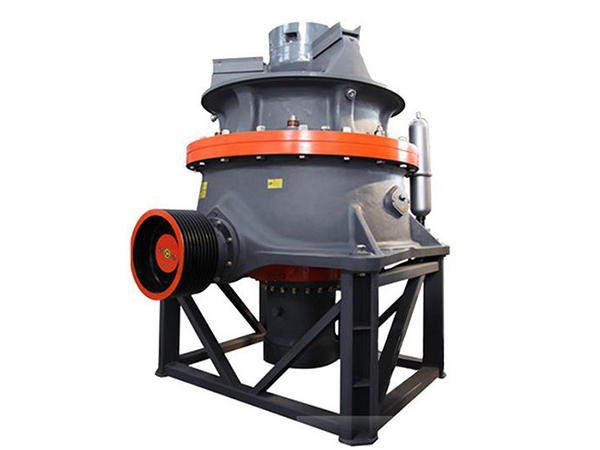
Recently, at the National Energy Work Conference, various ministries and commissions clearly stated that in 2012, China would make tangible progress in reasonably controlling total energy consumption and improving energy use efficiency. In response to thi
View Details
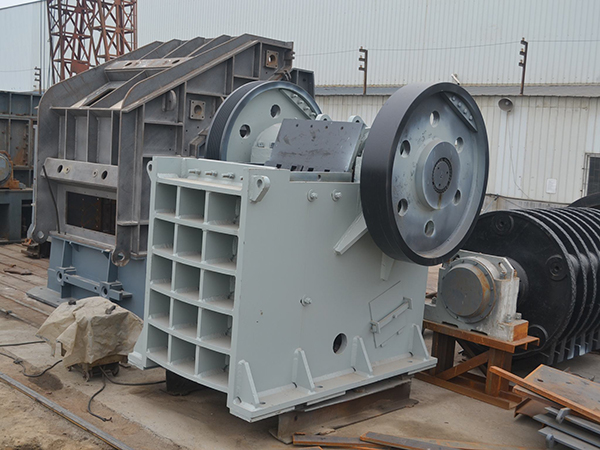
The development of high-speed rail drives the leap in the country's overall economic growth, while the development of crushers will promote the brilliance of high-speed rail. According to relevant reports, by 2015, the sales scale of China's crusher indus
View DetailsWe always adhere to the philosophy of 'First be a good person, then do things!' A handshake with Ruikuan always reflects the attitude of friendship and making good friends across all industries! You are welcome to visit Chongqing for guidance! We are constantly striving for perfection! We are always pursuing excellence!
 简体中文
简体中文